
When Electrical Problems Cannot Wait in Trussville
Electrical trouble usually shows up at the worst time. Late evening, storms over Trussville, wind picking up, and suddenly half the house goes dark or you catch a faint hot plastic smell in the hallway. Your first thought is usually the same: is this something small, or do we need to deal with this right now?
That line between "this can wait until morning" and "go to the panel and shut it off" matters. Some issues are annoying, like a dead outlet behind the couch. Others are safety problems that shouldn't sit overnight. I'll walk you through how to tell the difference, so you can keep your home safe without stressing over every little thing.
When you call Massey Electric, you're talking straight to me, the same master electrician who'll be at your door. No call center, no middleman. We'll talk through what's going on, decide how urgent it really is, and if it's an emergency, I'll tell you what to do until I get there.
This post lays out common emergency electrical repair situations in Trussville, what really counts as urgent, and how I go about tracking down the problem.
What Really Counts as an Electrical Emergency
When I say "electrical emergency," I'm talking about safety, not comfort. No coffee in the morning is annoying, but it's not the same as a breaker that won't reset and smells hot.
Here are problems that are usually real emergencies:
- A burning or melted plastic smell from outlets, switches, light fixtures, or your panel
- A hot or buzzing breaker panel, or breakers that won't reset and feel loose
- Outlets or switches that spark, snap, or arc when you plug something in or flip the switch
- Lights flickering in several rooms at once, not just one bulb
- Any mix of water and electricity, like roof leaks near fixtures, a wet panel, or standing water around outlets
If you notice any of those, that's in the "do something now" category. Most of the time I'll tell you to:
- Turn off the main breaker or the problem breaker, if you can get to it safely
- Unplug things on that circuit
- Stay clear of the area until I get there
Then there are things that feel urgent, but usually aren't middle-of-the-night problems:
- One outlet that's dead, but everything else nearby is fine
- A single light that stopped working and you've already tried a new bulb
- A ceiling fan that just quit but no smells, sounds, or other issues
- A GFCI outlet that trips now and then in a bathroom or garage, but resets and works
If you're not sure which side your problem's on, it's always fine to call and talk it through. A five‑minute conversation is a lot better than guessing and flipping random breakers.
Common Emergency Calls Around Trussville
Around Trussville, a lot of emergency calls follow the weather and how hard your system's working. Summer storms and high AC loads are tough on older panels and wiring.
I see a few patterns over and over:
- Storm damage
- Power surges that knock out certain circuits or damage electronics
- Tree branches pulling on meter masts or service lines
- Water getting into outdoor panels, meter bases, or outside outlets
- Overloaded circuits
- Portable AC units plugged into bedroom outlets
- Space heaters in cooler months running on older wiring
- Too many kitchen gadgets on one small circuit while you're cooking
- Aging panels and loose connections
- Panels that feel warm to the touch or make a faint buzzing sound
- Lights that dim when the AC, well pump, or dryer kicks on
- Older breaker brands that trip a lot or don't trip when they should
Here's what homeowners usually notice first:
- Smell: hot, burnt, or like melting plastic near a panel or outlet
- Sound: buzzing, sizzling, or snapping when something turns on
- Sight: lights dimming or flickering in more than one room, scorch marks, discoloration
- Trips: a breaker that trips right away every time you reset it
When we talk on the phone, I'll usually ask what you see, hear, and smell. A lot of times I'll tell you to:
- Turn off a specific breaker if it's safe to do
- Unplug certain appliances or power strips
- Keep kids and pets away from the panel, outlets, or wet areas
That keeps things as safe as possible until I show up.
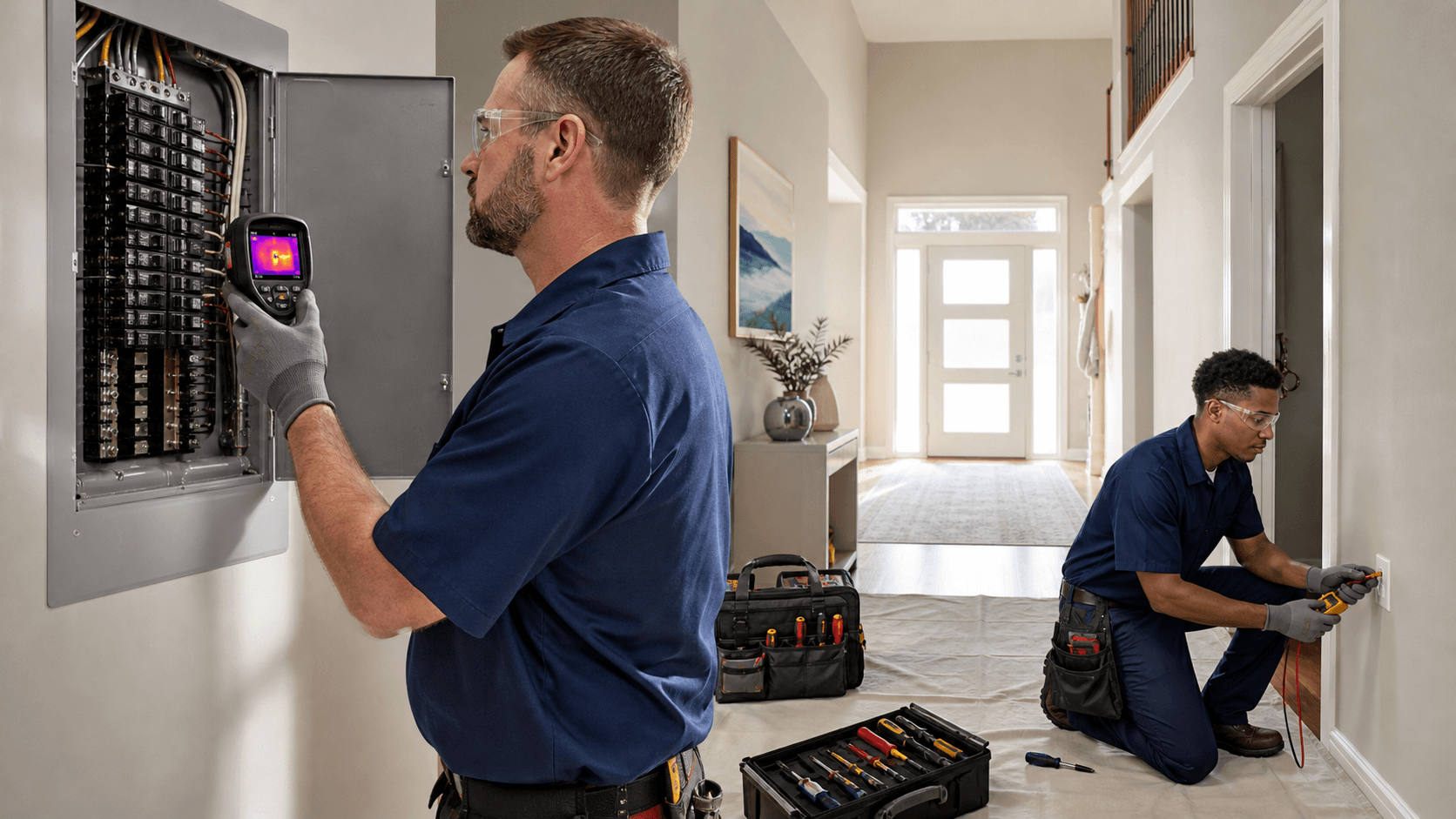
How I Diagnose An Emergency Electrical Problem
When you call with an urgent problem, the first step is a quick phone check. I'll ask a few simple questions:
- What did you notice first, a sound, smell, or loss of power?
- Is it one room, half the house, or the whole place?
- Any recent storms, leaks, new appliances, or DIY work?
Based on those answers, we decide if it's "I need to come tonight" or "we can get you on the schedule soon and I'll tell you what to do in the meantime."
Once I get there, safety comes first. I take a quick look at:
- The main panel and main shutoff
- Any subpanels, outdoor equipment, or generator hookups
- The spots you pointed out, like a certain outlet, attic area, or ceiling stain
Here's how I usually work through it:
- Visual and smell check
I look for discoloration, melted plastic, scorch marks, water stains, loose breakers, or anything that looks out of place. I also pay attention to heat. A warm panel can tell me a lot.
- Testing with a meter
I test voltage to see what's live, what's low, and where it drops. That tells me if we're dealing with a bad breaker, a loose neutral, a short, or a problem on the utility side.
- Isolating the problem circuit
I don't just start flipping breakers until something works. I turn things off and on in a set order, so I know which circuit is causing trouble and which ones are safe.
While I work, I explain what I'm seeing in plain language. No big technical terms. You'll know what happened, what's safe to turn back on, and what needs more work later.
Emergency Repair vs. Scheduled Upgrade
Not every emergency call turns into a full upgrade on the spot. There's a big difference between "we make this safe tonight" and "we plan a bigger project when everyone's had time to think it through."
Emergency work is about taking care of active hazards, like:
- Replacing bad breakers or damaged wiring that's overheating
- Repairing burned or loose connections in panels and junction boxes
- Shutting down unsafe circuits until they can be repaired the right way
Scheduled work is for the bigger picture:
- Panel replacements and adding more capacity for modern loads
- Adding new circuits for kitchen, laundry, shops, and outdoor spaces
- Rewiring older parts of the home that are showing age
- Adding whole‑home surge protection to help protect HVAC equipment and electronics
Sometimes I do a quick safe fix at night, then line up a return visit. For example:
- A failing main breaker that I stabilize so the house is safe, then I schedule a full panel replacement with the power company involved
- A generator setup that was done with extension cords in a hurry, then we plan a proper interlock or transfer setup so it's safe and up to code
A lot of electrical repair in Trussville starts with an urgent issue, then turns into a chance to clean up older wiring and give your system the capacity it really needs.
How to Stay Safe Until the Electrician Arrives
There are a few simple, low‑risk steps you can take while you wait, without doing your own electrical work.
Good ideas:
- Turn off a suspect breaker if you smell something hot, hear buzzing, or see sparks
- Unplug anything on a circuit that's acting strange or flickering
- Keep kids and pets away from wet areas, GFCIs that keep tripping, or any exposed wiring
- Use flashlights instead of candles if the power is out
Things to avoid:
- Don't remove panel covers or stick tools inside your panel
- Don't keep resetting a breaker that trips over and over
- Don't run extension cords across rooms as a "temporary" fix for days or weeks
- Don't try to move or repair anything that's wet and energized
A lot of emergencies I see could've been caught with basic maintenance: tightening older connections, replacing worn outlets, and adding surge protection on big equipment like HVAC systems. Regular checkups help catch those small warning signs before they turn into a hot breaker at 10 p.m.
If you're dealing with something that doesn't feel right, or you're just not sure if it can wait, give me a call or book a free estimate online. We'd rather do five jobs right than fifteen we can't stand behind.
Get Started With Your Project Today
If you are noticing flickering lights, tripping breakers, or outlets that are not working properly, we are ready to help you restore safety and comfort to your home. At Massey Electric, our licensed team provides prompt, reliable electrical repair in Trussville, AL tailored to your specific needs. Schedule your service online today so we can diagnose the issue quickly and provide a clear, straightforward solution. Let us take care of the electrical problems so you can focus on enjoying your home with confidence.