When a "Quick Fix" Eats Your Whole Saturday
A lot of Trussville homeowners start with a simple plan: swap a light, fix a dead outlet, change a switch. Next thing you know, half the house is dark, you're running back and forth to the breaker panel, and your whole weekend is gone. Electrical work can look simple on the surface, but once you open things up, it can get confusing fast.
Some small electrical jobs are OK for a handy homeowner, as long as you respect safety and know when to stop. Other problems really do need a licensed electrician who does this every day. I'm going to walk through the most common DIY electrical fixes people try, what's reasonable to check yourself, and the clear signs it's time to bring in help.
We're a local, owner-operated company. I'm Corey, a licensed, bonded master electrician. I pull permits, deal with inspectors, and work on homes and small businesses around Birmingham all week long. This is what I do every day in the field, not something I read on a message board.
Swapping Light Fixtures Without Losing Your Mind
Changing a light fixture is one of the most common jobs people tackle on their own. Hallway dome light, new dining room chandelier, brighter bedroom light. It all starts the same way: ladder, screwdriver, hopefully the right breaker off.
Here are a few basics I want folks to keep in mind:
- Always shut off the correct breaker, not just the wall switch
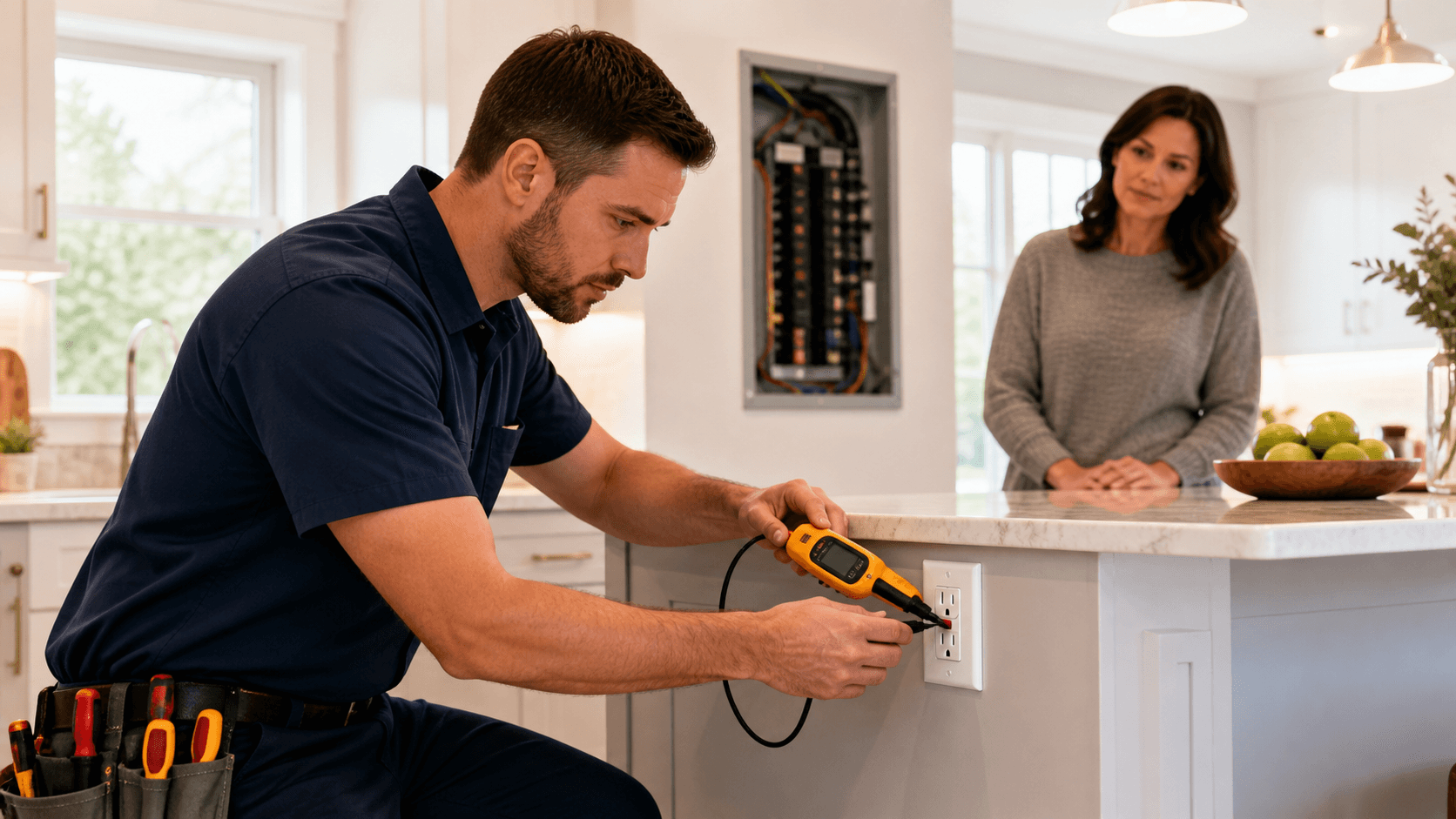
- Test that the power's actually off with a non-contact tester
- Support the light so you're not holding it by the wires
- Match wire colors and use proper wire nuts, not tape
A lot of simple swaps are straightforward if there's only one cable in the box and the old fixture was wired correctly. The box needs to be solid and rated for the weight. That last part matters a lot when you go from a small light to a fan or a heavy chandelier.
Here's when you should stop and call an electrician instead of guessing:
- You see multiple cables, more than three wires, or mystery wires tied together
- The ceiling box wiggles, is cracked, or isn't tight to the framing
- You're replacing a basic light with a ceiling fan and you're not sure if the box is fan-rated
- You're thinking about adding a brand-new light where there was nothing before
Around fall, plenty of people want new porch lights or nicer fixtures before guests show up. If you want that done safely, it helps to plan ahead so you're not rushed and tempted to cut corners.
Outlets, GFCIs, and Dead Corners of the House
Another big DIY area is outlets that don't work or GFCI devices that keep tripping. It often starts simple: half a room is dead, the garage outlet quit, or an outdoor plug that worked last summer is now dead.
A homeowner can usually check a few things without getting in too deep:
- Look for a tripped GFCI in bathrooms, kitchen, garage, or outside, and try a reset with nothing plugged in
- Check the breaker panel for a breaker that's off or stuck in the middle, then flip it firmly off and back on
- Unplug space heaters, treadmills, window units, or chargers on that circuit, then see if it holds after you reset
Those are safe, basic checks. What you don't want to do is start swapping outlets at random or replacing GFCIs just because they trip.
It's time to get help if:
- A GFCI won't reset with nothing plugged in, or it trips again right away
- You see scorch marks, hear buzzing, or smell anything burnt at an outlet or switch
- Multiple outlets are dead and you can't find any tripped GFCI or breaker
- You feel a tingle when you plug in or touch a device
GFCIs and breakers are safety devices. If they won't stay on, they're usually telling you something's wrong down the line. Forcing them back on or guessing at parts doesn't fix the actual problem and can hide a real hazard.
Tripping Breakers, Space Heaters, and Load Problems
As soon as we get that first cool snap, space heaters, heated blankets, and extra plug-in heaters start popping up all over houses. That's also when calls about tripping breakers jump up.
There's a difference between normal and not normal here:
- One breaker trip after you plugged a heater, vacuum, and hair dryer into the same circuit, that happens
- A breaker that trips every time you run the microwave and toaster together points to a load issue on that circuit
- A breaker that feels warm, buzzes, or won't reset at all isn't normal and needs attention
A homeowner can try a couple of simple things:
- Move high-draw items like space heaters, vacuums, and window AC units to another circuit
- Stop piggybacking power strips and extension cords; plug big loads straight into the wall
- Spread out what's running at the same time on one circuit
Here's when it's time for an electrician, no debate:
- The breaker trips even with light, normal loads like a TV and a couple of lamps
- The breaker won't stay reset, feels loose, or the panel cover is hot to the touch
- You see rust, water stains, or white/green corrosion in or around the panel
- You hear crackling or see flicker across multiple rooms when a big load kicks on
On these calls, we usually check the breaker itself, the wiring at the panel, and the outlets or lights on that circuit. We test the load, look for loose or damaged connections, and talk about options like splitting overloaded circuits, running dedicated lines for big appliances, or replacing weak or tired breakers.
Switches, Dimmers, and That One Weird Switch
Switches are another spot where DIY looks simple until you pull the cover off. A lot of people want to:
- Swap old switches for new rockers
- Add dimmers in a dining room or living room
- Fix a 3-way where either switch can turn the light on and off
If it's one basic switch controlling one light, a careful homeowner can sometimes handle a straight swap. The key is to:
- Turn off the breaker, not just the switch
- Take a clear photo before you remove any wires
- Move one wire at a time from the old switch to the same spot on the new one
- Use the right dimmer for the type of light, like an LED-rated dimmer for LED bulbs
Common problems we see after DIY switch work:
- Mixed-up traveler wires on 3-way switches, so the light only works in certain positions or not at all
- Dimmers not rated for the total wattage or not LED compatible, which causes buzzing and flicker
- Boxes packed so full of wire and devices that connections work loose and heat builds up
Call an electrician when:
- You open a box and see a bundle of wires and wire nuts that makes no sense, even with a photo
- Lights buzz, flicker, or feel hot after you install a new switch or dimmer
- You want to add a brand-new switch location, a new 3-way, or control from multiple spots; that's new wiring, not just swapping parts
What's Fine to DIY and What to Leave Alone
I get that some folks are handy and like to work on their own homes. There's a line, though, where DIY stops being smart and starts being risky.
Reasonable DIY for many homeowners, if you're careful:
- Swapping a light bulb
- Replacing a basic light fixture on a solid box, with power off and no mystery wiring
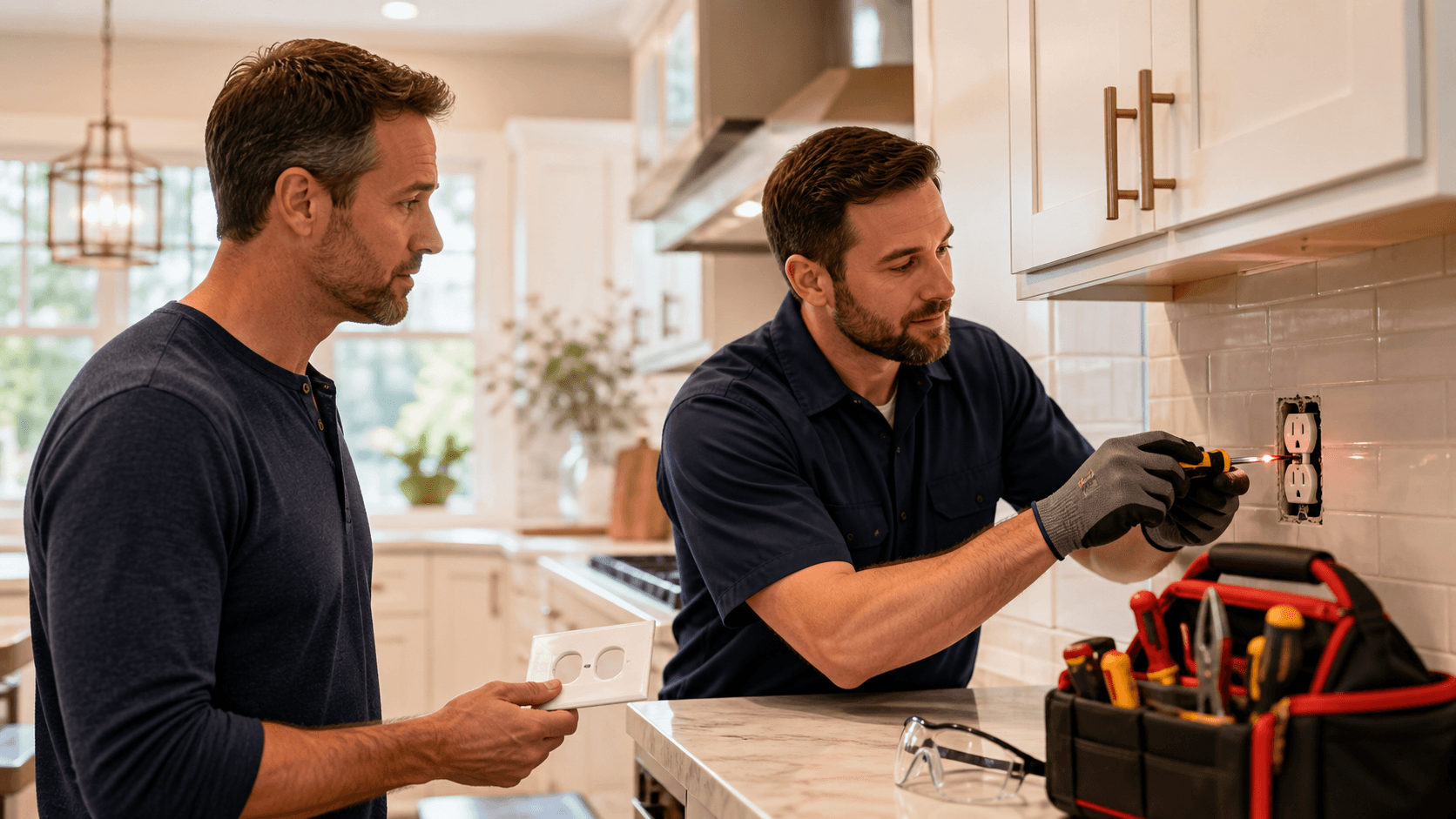
- Changing a simple outlet or single-pole switch, one wire at a time, after you kill the breaker and test for power
Things I strongly recommend you don't mess with:
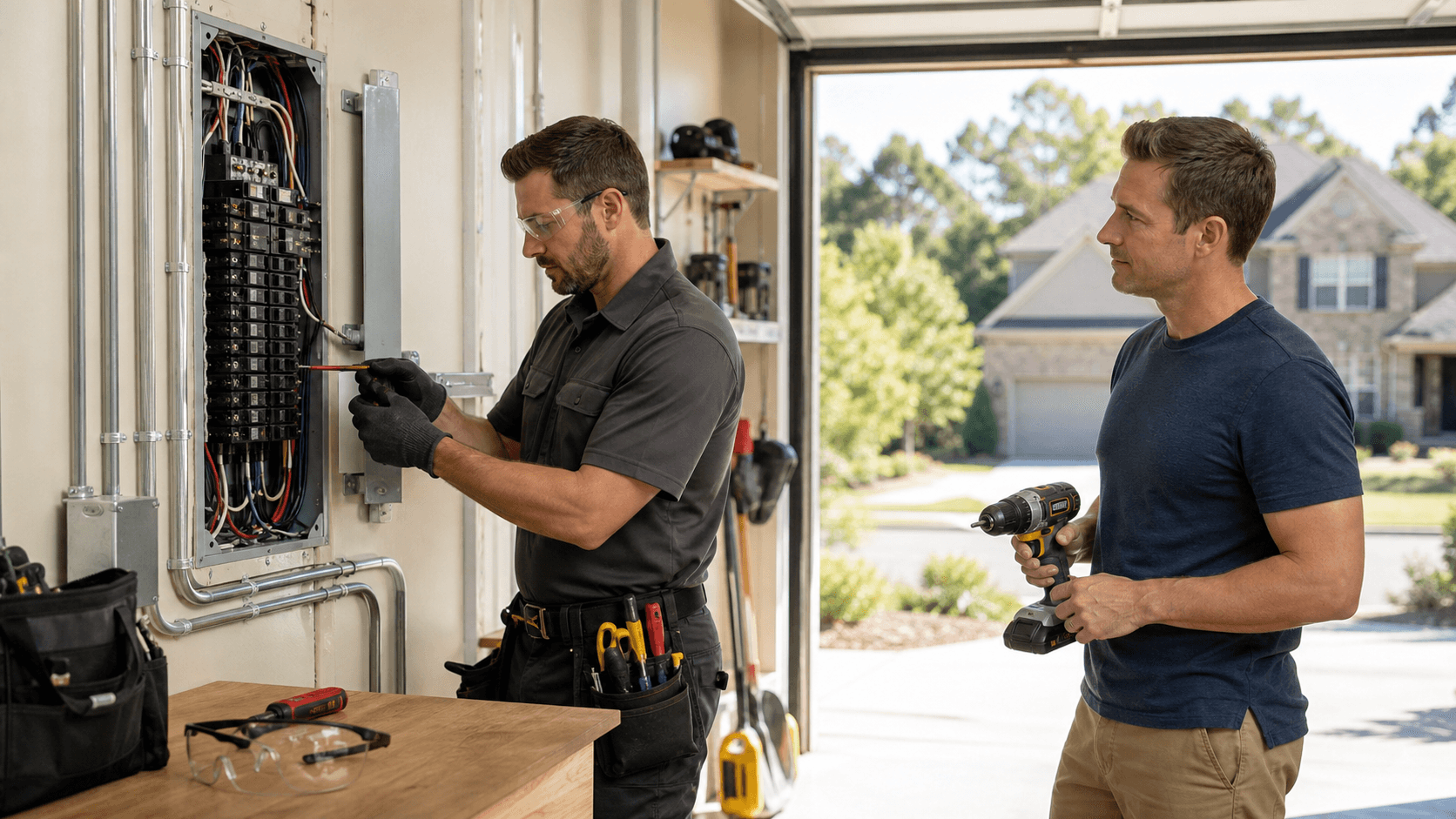
- Anything inside your breaker panel
- Running new circuits, subpanels, or feeder lines
- Aluminum wiring, old knob-and-tube, or random junction boxes in attics and crawlspaces
- Electric vehicle outlets, hot tub or spa wiring, and generator hookups
There are also some clear symptoms where you should stop everything and call an electrician:
- Flickering or dimming lights that aren't just a loose bulb
- The same breaker tripping over and over
- Outlets or switches that feel warm, loose, or smell burnt
- A shock, tingle, or small bite when you touch an appliance, faucet, or metal cover plate
Getting electrical work done right isn't about being fancy. It's about safe wiring that meets code, passes inspection, and doesn't come back to haunt you when you sell the house.
At Massey Electric, we'd rather do five jobs right than fifteen we can't stand behind. I personally handle every job, and we're licensed and bonded. We pull the permits and deal with the inspections so you don't have to worry about it.
If you're in or around Trussville and you've hit that point where the "quick fix" isn't so quick anymore, call us or book a free estimate online. We'll take a look, explain what's going on in plain English, and get it fixed the right way.
Get Started With Your Project Today
If you are noticing flickering lights, tripping breakers, or outdated wiring, our team at Massey Electric is ready to help restore your home's safety and comfort. Schedule professional electrical repair in Trussville, AL so we can assess the issue and provide a lasting solution. We will walk you through your options, answer your questions, and complete the work with careful attention to detail. Let us take care of your electrical problems so you can focus on enjoying your home.