Why Kitchen Outlets Trip So Much in Homewood
Kitchen outlets in Homewood get a workout. Coffee maker, toaster, air fryer, maybe a phone charger, all pulling power from a few spots along the counter. Then suddenly, everything on one side shuts off and you're stuck with an outlet not working in Homewood and half your counter dead.
Kitchens are wired different from the rest of the house on purpose. There's more power, more protection, and more code rules packed into a small space. That extra protection is good, but it also means you see more tripped outlets and breakers in the kitchen than in a bedroom or hallway.
Most of the time, when we get a call about an outlet not working in a Homewood kitchen, it comes down to one of three things:
- A tripped GFCI outlet
- A tripped AFCI or dual-function breaker in the panel
- A small-appliance circuit that's tired of being overloaded
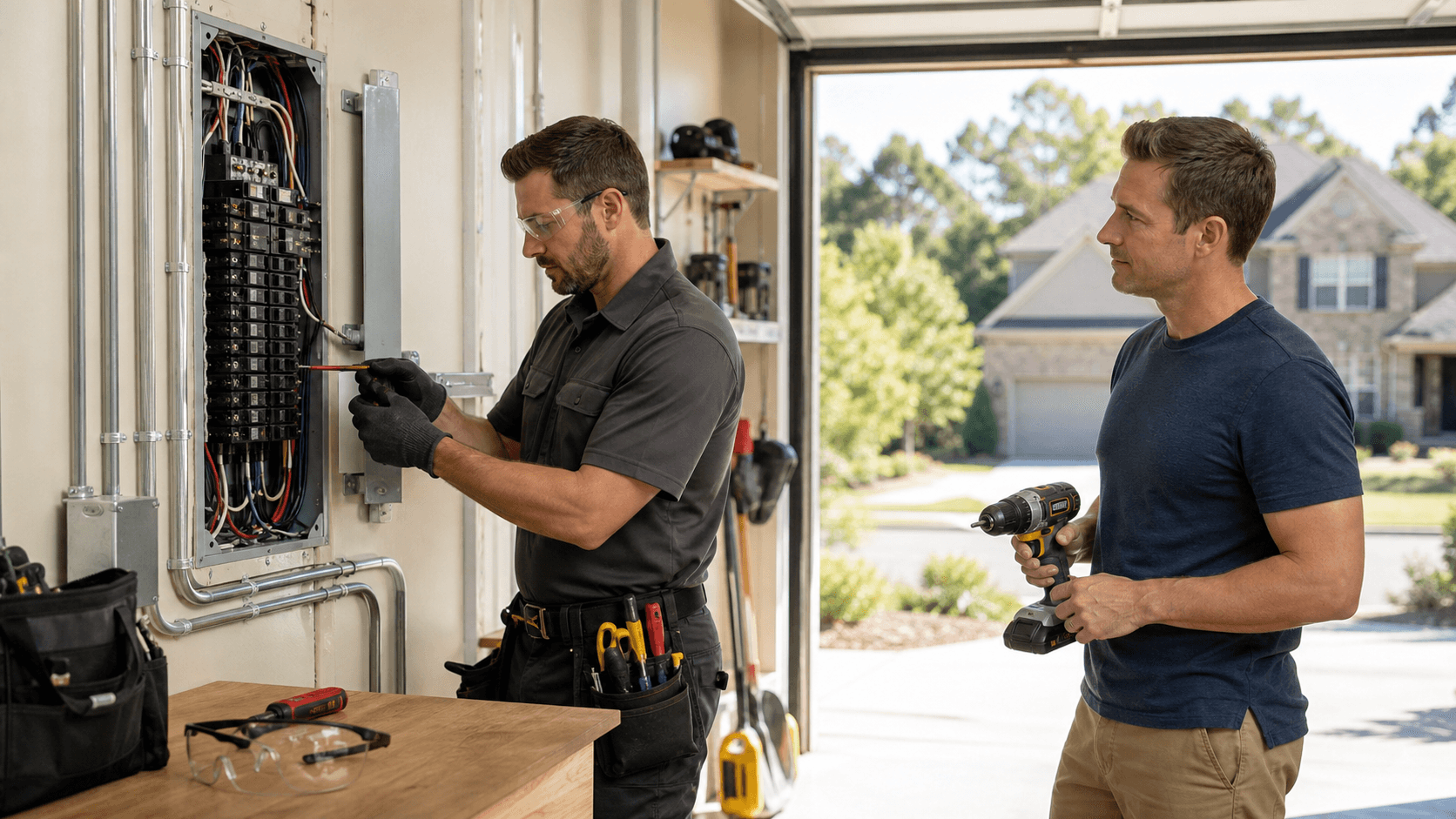
We're a licensed and bonded electrical company, and I'm the owner and master electrician on every job. When work goes beyond a simple repair, we pull permits and do it so it passes inspection and holds up over time. Some things in your kitchen you can safely check yourself. Others you should leave alone. The goal here is to help you tell which is which.
How Kitchen Circuits Are Supposed to Work
Modern kitchens are built around what the code calls small-appliance circuits. In simple terms, that means you should have at least two 20-amp circuits feeding the countertop outlets. Those are your workhorse circuits for toasters, blenders, slow cookers, and whatever new gadget shows up.
Those two circuits usually feed several outlets in a row. So one problem, like a bad connection at a single outlet or a tripped device, can knock out everything downstream. That's why it can feel like half the kitchen went dark even though only one thing actually failed.
Older Homewood homes are often set up a little different:
- Fewer dedicated kitchen circuits
- Older breaker panels
- Microwaves or dishwashers sharing circuits with countertop plugs
That kind of setup worked fine when you had one coffee pot and a radio. It's a lot less happy with air fryers and big microwaves. When we upgrade a panel or add a circuit in a kitchen, we pull the right permits and build it to current code so the inspector signs off and you're not fighting trips every time you cook.
GFCI Outlets in Kitchens and Why They Trip
GFCI outlets are the ones with the little Test and Reset buttons on the face. They watch the power going out and the power coming back. If some of that electricity starts leaking into water, a person, or something it shouldn't, the GFCI shuts off fast.
In most Homewood kitchens, you'll find GFCIs:
- By the sink and prep areas
- On islands and peninsulas
- Sometimes as one single GFCI that protects a line of "normal" outlets down the counter
Common reasons a GFCI trips include:
- Damp countertops and wet cords
- Older appliances with tiny internal leaks to ground
- Outdoor or garage outlets secretly tied into the same GFCI
- GFCI devices that are simply worn out
If you're dealing with an outlet not working in Homewood and you see one of those outlets with buttons, that's your first stop. Safe checks you can try:
- Press Reset on every GFCI you can find in the kitchen, garage, and outside
- Unplug everything from the dead outlets before you reset
- If the GFCI won't reset or trips again right away with nothing plugged in, stop and call a pro
What you don't want to do is keep jabbing that Reset button all week hoping it fixes itself.
AFCI Breakers, Dual Function Breakers, and Dead Kitchen Outlets
AFCI stands for arc-fault circuit interrupter. Instead of just watching for overload, it listens for the kind of sparking pattern you get from loose connections or damaged cords. When it hears that, it trips to cut fire risk.
Newer kitchens often use AFCI or dual-function breakers in the panel. Dual-function breakers combine GFCI and AFCI protection in one device. In those homes, a "dead" outlet might be totally fine, and the real problem is a tripped breaker in the panel.
Here's what to look for in the breaker box:
- A breaker handle that isn't fully ON or fully OFF, kind of sitting in the middle
- A tiny Test button on the breaker itself
- To reset, push the handle all the way OFF, then firmly back ON
Things that can trip AFCI or dual-function breakers in kitchens:
- Worn or damaged cords on countertop appliances
- Cheap plug-in gadgets and adapters
- Loose or aging connections in older wiring tied into newer breakers
If the same breaker trips over and over, especially when only one light or outlet is on, that's not just a random annoyance. That's a sign the circuit needs to be checked.
When One Kitchen Outlet Fails and Others Still Work
Sometimes only one section of the kitchen is dead. One outlet works, the one right beside it doesn't. Or one whole stretch of countertop is out, but the microwave still runs. That's usually a wiring problem on that particular run.
Here's what often happens:
- An outlet has a loose backstab connection where the wire is pushed into the back instead of wrapped around the screw
- A single bad device in the middle of the run keeps power from reaching the rest
- A weak connection finally gives up when you plug in a high-draw appliance
Older Homewood houses can have extra twists:
- Backstabbed outlets from past quick work
- Very old wiring, sometimes with different metals mixed together
- DIY add-ons or hidden junction boxes covered by cabinets or tile
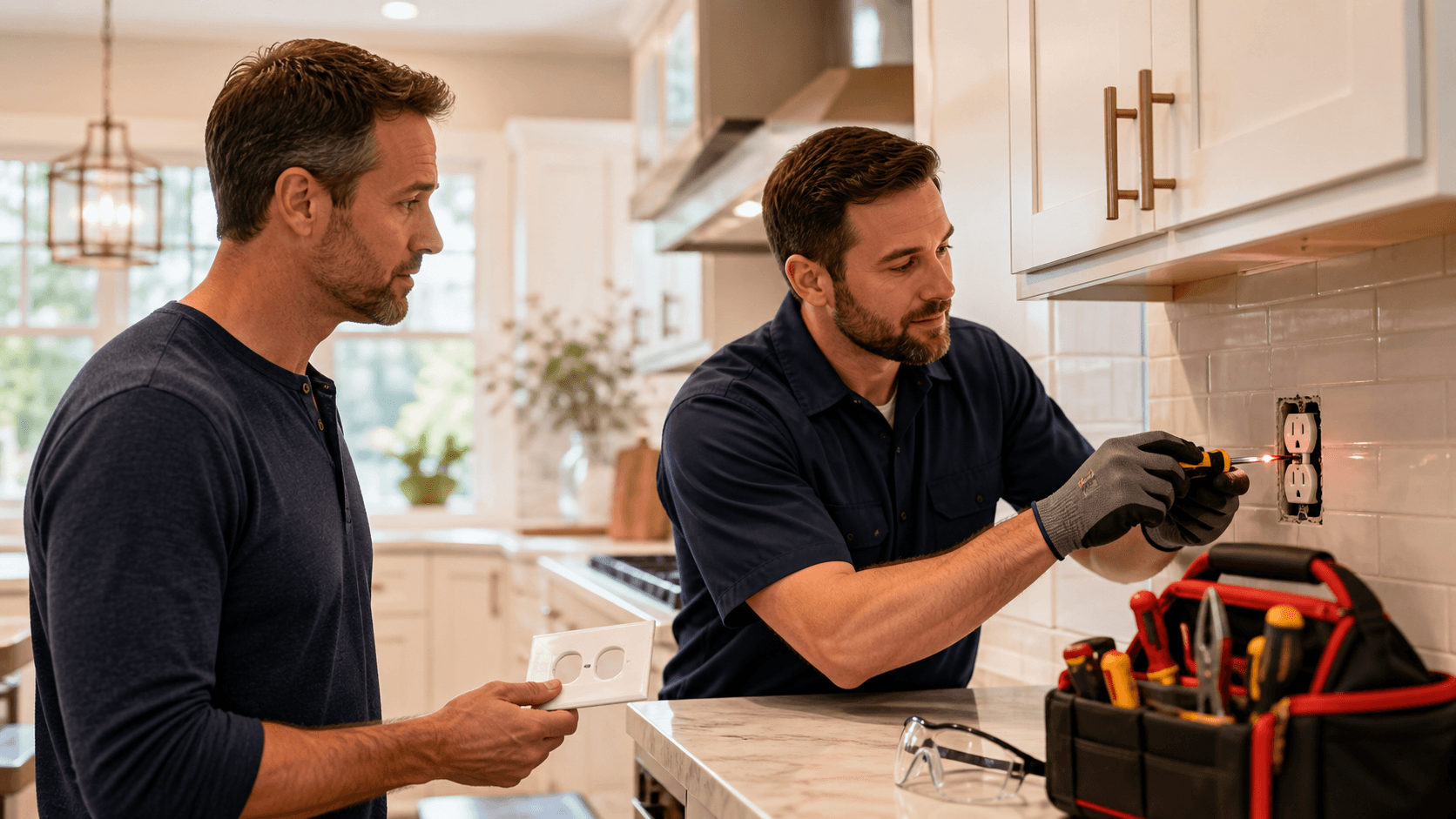
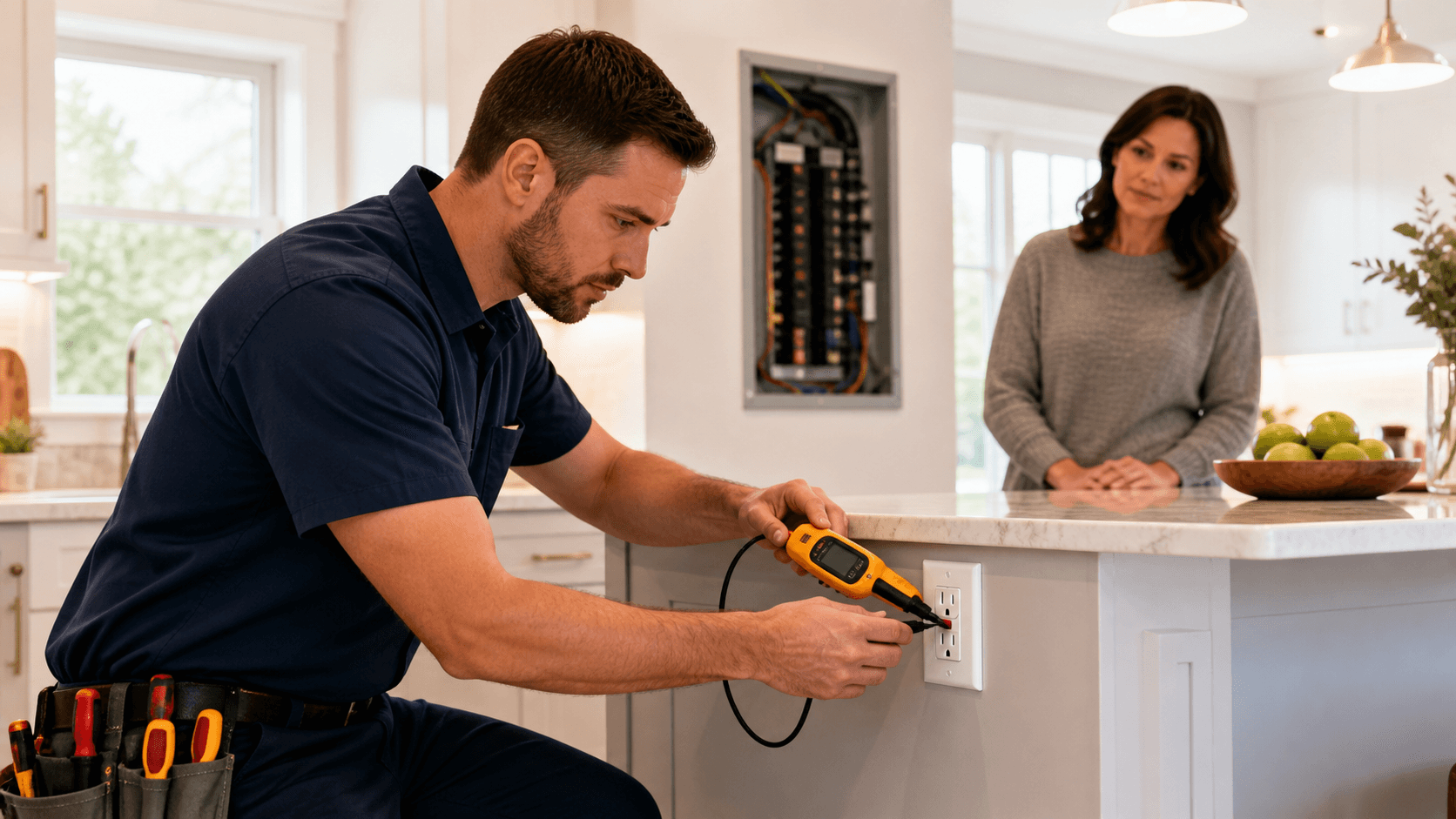
Swapping "just the outlet" isn't always the answer. If the problem sits in the box, the wiring, or a buried splice, you can change outlets all day and still be stuck with the same issue. When we troubleshoot an outlet not working in Homewood kitchens, we follow the whole run, not just the dead plug, so we find the weak link before it fails again.
Overloaded Kitchen Circuits, Seasonal Problems, and Simple Checks
As the weather cools, kitchen counters in Homewood tend to fill up. Extra slow cookers, warming trays, more coffee makers, maybe even a little portable heater nearby. Most of that load ends up on those same two small-appliance circuits.
Two or three big appliances on one 20-amp circuit can trip a breaker or GFCI even when nothing is "broken." It's just too much draw on one line at the same time. A few simple habits help:
- Spread heavy-use appliances across different outlets that are likely on different circuits
- Try not to run toaster, microwave, and coffee maker together on the same double outlet
- Skip space heaters on kitchen counter circuits if you can
Sometimes, the real fix is adding another circuit. Big stand mixers, built-in coffee systems, or a kitchen that trips every time you cook for family are good signs it might be time to add a dedicated line and have it inspected.
There are also a few safe checks you can try before you call for help:
- Reset all GFCI outlets in the kitchen, garage, outside, and bathrooms
- Check the panel for any tripped kitchen breakers and reset them properly
- Unplug everything on the dead outlets, then see if they come back after a reset
Don't take outlets or switches apart if you're not comfortable, and don't keep resetting a breaker that's hot or trips right away. If you smell burning, feel heat at outlets, hear buzzing, see flickering lights tied to a certain plug, or the same spots keep going out, it's time for a licensed and bonded electrician to take a look.
If your kitchen outlets keep tripping or you've got an outlet not working in Homewood and you're tired of guessing, call us at (205) 451-5205, book a free estimate online at masseyelectricllc.com/book-online, or learn more at masseyelectricllc.com.
Get Started With Your Project Today
If you are dealing with an outlet not working in Homewood, we are ready to diagnose the problem safely and get your power back where you need it. At Massey Electric, we carefully inspect your wiring, outlets, and breakers to find lasting solutions, not quick fixes. Reach out today so we can schedule a convenient time, walk you through what we find, and complete the work with as little disruption to your home as possible.