Moody, AL Electrical Safety Walkthrough for Homebuyers
Buying a house in Moody is exciting, but the electrical system is one thing you don't want to ignore. Once you move in and start plugging in fridges, TVs, space heaters, and all your chargers, hidden problems show up fast. Some of those problems are just annoying. Some can be real safety issues.
If your offer's accepted and the home inspection's done, this is a good time to look a little closer. General inspectors do a basic check, but they're not opening every panel or crawling around trying to track down old DIY projects. In this walkthrough, we'll talk about red flags in the breaker panel, outlets and GFCIs, and places where DIY wiring often hides, plus when it makes sense to bring in an electrician in Moody, AL, before closing. We're a one-man, licensed and bonded shop, and we'd rather help you catch trouble now than show up later for an emergency.
What Your Breaker Panel's Telling You About the House
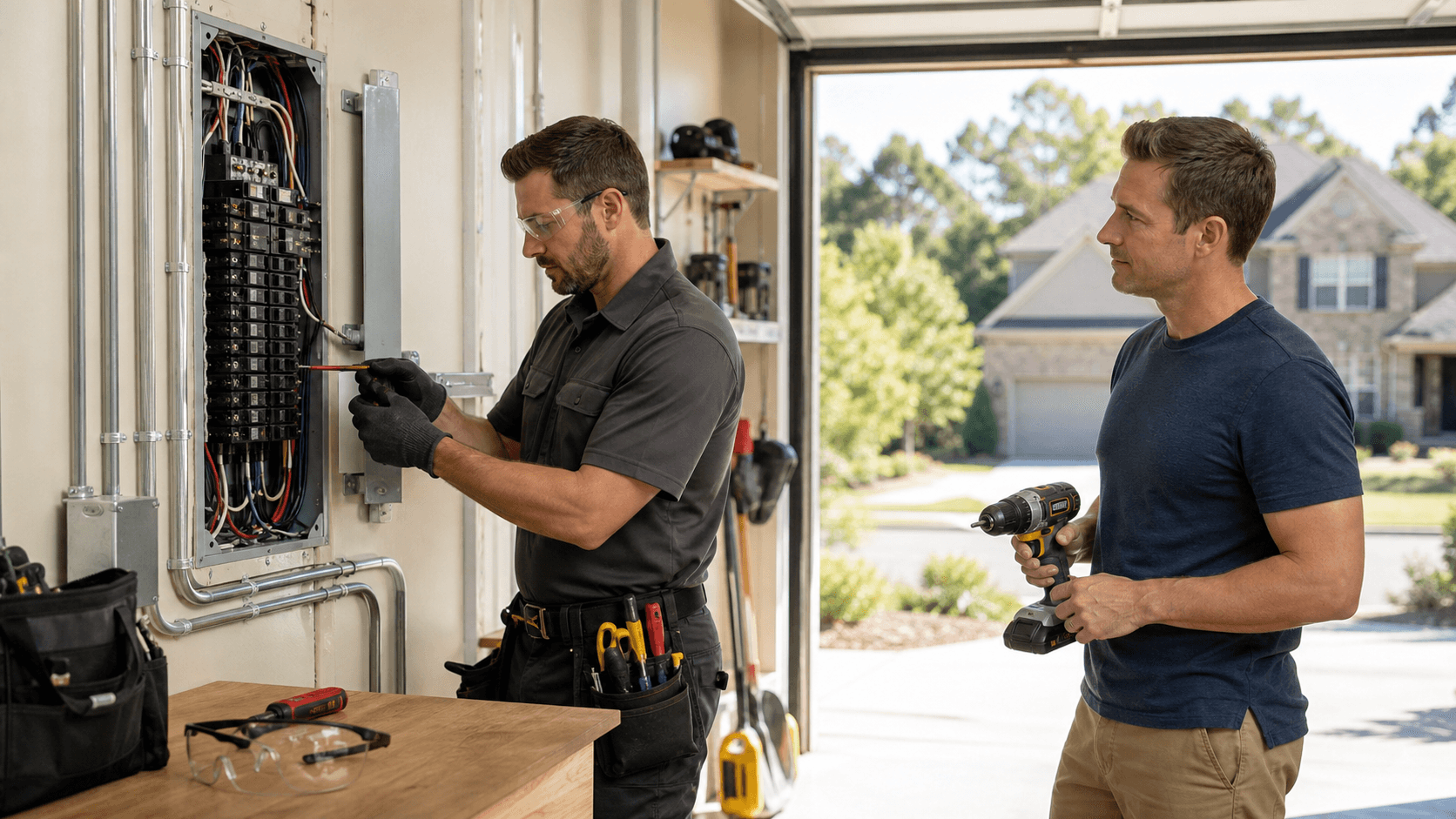
The breaker panel's the heart of the electrical system. It's usually in the garage, basement, or on an outside wall. When you find it, just stop and look at the basics first.
Things that should get your attention right away:
- Rust on the panel cover or around the edges
- Missing cover screws or a door that won't shut right
- A panel blocked by shelves, boxes, or tools so you can barely reach it
A clean, solid panel that's easy to get to is a good sign. A beat-up, wobbly, or buried panel tells you the house hasn't been cared for the way it should.
Next, open the door and look at the labeling and layout. You don't have to understand every breaker, but notice if:
- Breakers aren't labeled at all
- Labels are scratched out and rewritten a bunch of times
- You see two wires under one breaker screw, called double tapping
Double tapping's a big warning sign. It usually means someone tried to add more circuits without doing it the right way. It can lead to loose connections and heat.
Age and brand matter too. Some older panels are too small for the way we use power now. If you see:
- Lots of thin breakers stuffed into a small panel
- Dark or discolored spots around breakers
- Plastic that looks melted or burnt
that's a sign the panel's been hot. As the weather cools off and people start using more heat, lights, and holiday stuff, weak panels tend to show their problems. Breakers trip more, lights dim, and in bad cases, things can overheat.
If the panel looks scorched, crowded, or just plain off, it's worth having an electrician in Moody, AL, take a closer look before your final walkthrough. A short visit now can keep you from inheriting a problem you can't see yet.
Outlets, Switches, and GFCIs That Make Me Nervous
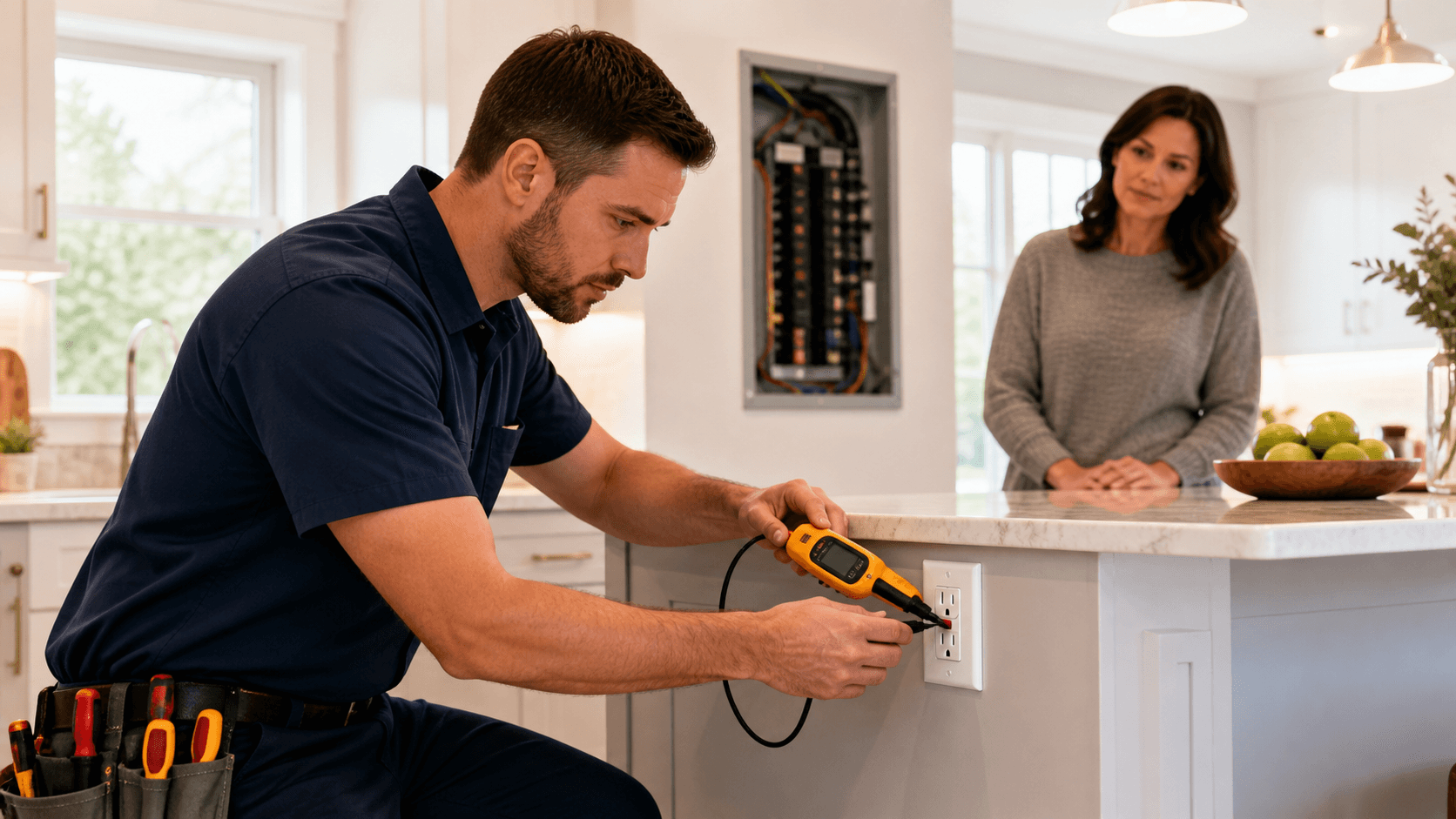
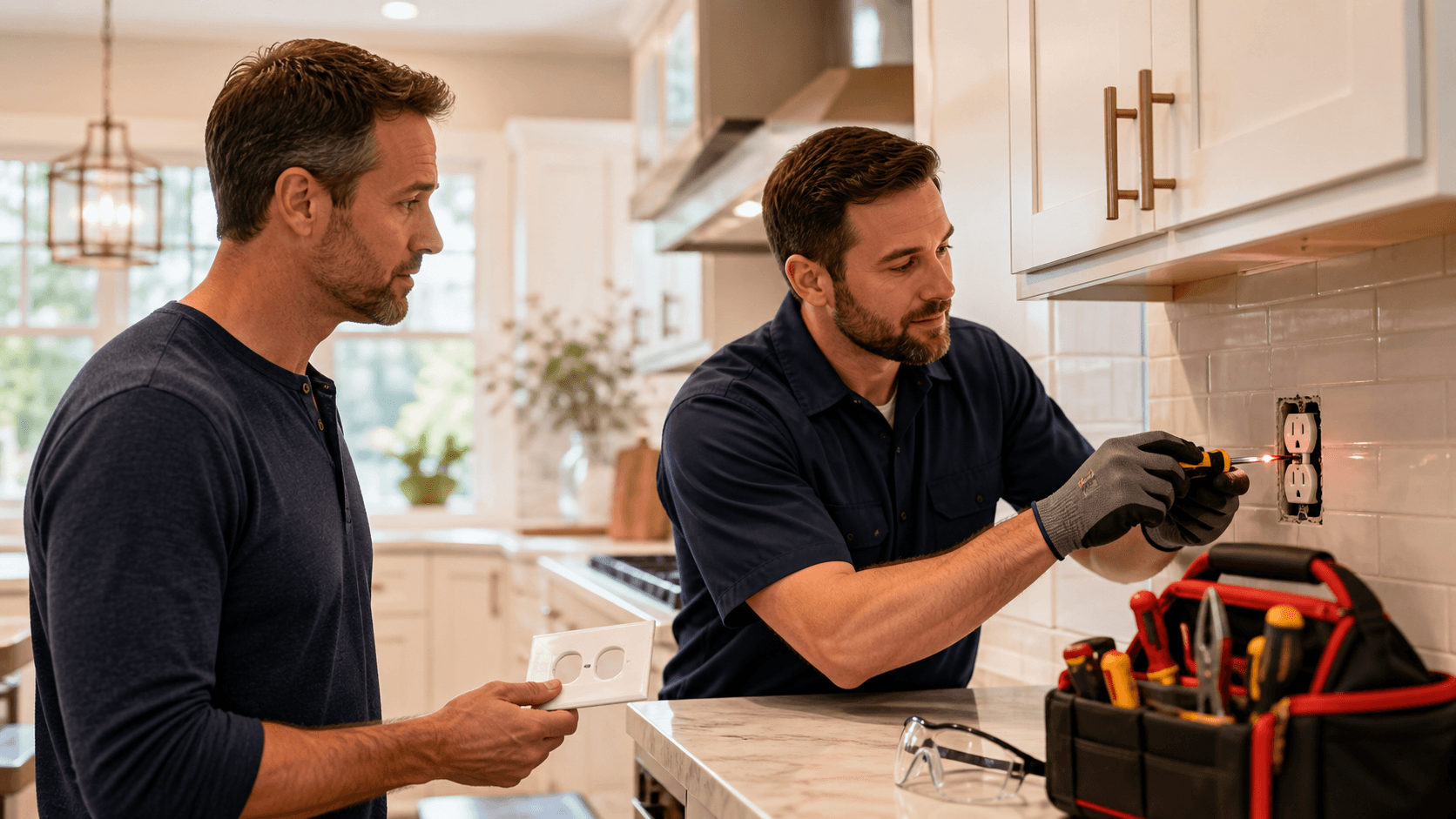
You don't have to be an electrician to notice trouble at outlets and switches. As you walk through the house, do a simple check.
Pay attention to:
- Outlets that wiggle or move when you plug something in
- Cracked or broken cover plates
- Outlets that spark when you plug in a charger
- Outlets or switches that feel warm after light use
Warm or loose outlets aren't just ugly. They can mean loose wires behind the wall, which can arc and burn.
Next, think about GFCI protection. These are the outlets with the test and reset buttons. They should be in:
- Kitchens
- Bathrooms
- Garages
- Outdoor areas
- Unfinished basements or damp areas
If you don't see GFCIs in these spots, or you see one random GFCI in a room with nothing else protected, that's a sign the electrical work's dated or halfway done. With storms, humidity, and wet areas around the house, GFCIs are a simple safety layer that can help prevent shocks.
Also look for old and mismatched devices. Two‑prong outlets in a house that otherwise looks updated, or a weird mix of styles and colors, can mean someone swapped things out over the years without a real plan. It's not always unsafe, but it tells you to slow down and ask more questions.
Your nose helps too. If you smell burning at an outlet, see lights flicker when big appliances kick on, or notice half the outlets in a room don't work, that's not normal. Those are signs of loose connections or overloaded circuits that can trip breakers, shock people, or fry your electronics once you move in and plug everything in for real.
Spotting DIY Wiring in Attics, Garages, and Add‑Ons
A lot of the scary stuff lives where people think no one will look: attics, crawlspaces, garages, and bonus rooms. This is where DIY shows up the most.
Common DIY red flags include:
- Wire nuts hanging loose with no box around them
- Wires twisted together and taped instead of in a junction box
- Extension cords used as permanent wiring
- Cables stapled right on the face of walls or running across doorways
Additions and garage hangout spaces are also hot spots. Many of these got wired by a friend or a previous homeowner, with no permit and no inspection. You might see:
- Extra rooms fed off one old outlet
- Lights tied into whatever wire was closest
- Circuits that go dead in random parts of the room
In the attic or crawlspace, quick clues include loose cable tossed across the floor, junction boxes buried under insulation, and low wires at head height. As the weather cools down and people store holiday decorations, this kind of wiring can get stepped on, kicked, or damaged, which is a real fire risk.
Here's why all this matters before closing: some DIY work's so bad it has to be ripped out and redone properly. That's not a small job. You want to know about that before you sign, so you can decide whether to push for repairs, a credit, or a different house.
When the Home Inspection Isn't Enough
Home inspectors are useful, but they're generalists. They look at the whole house, not just the electrical. They usually won't:
- Remove panel covers and check every connection
- Trace odd wiring through the attic and crawlspace
- Load-test circuits for bigger appliances
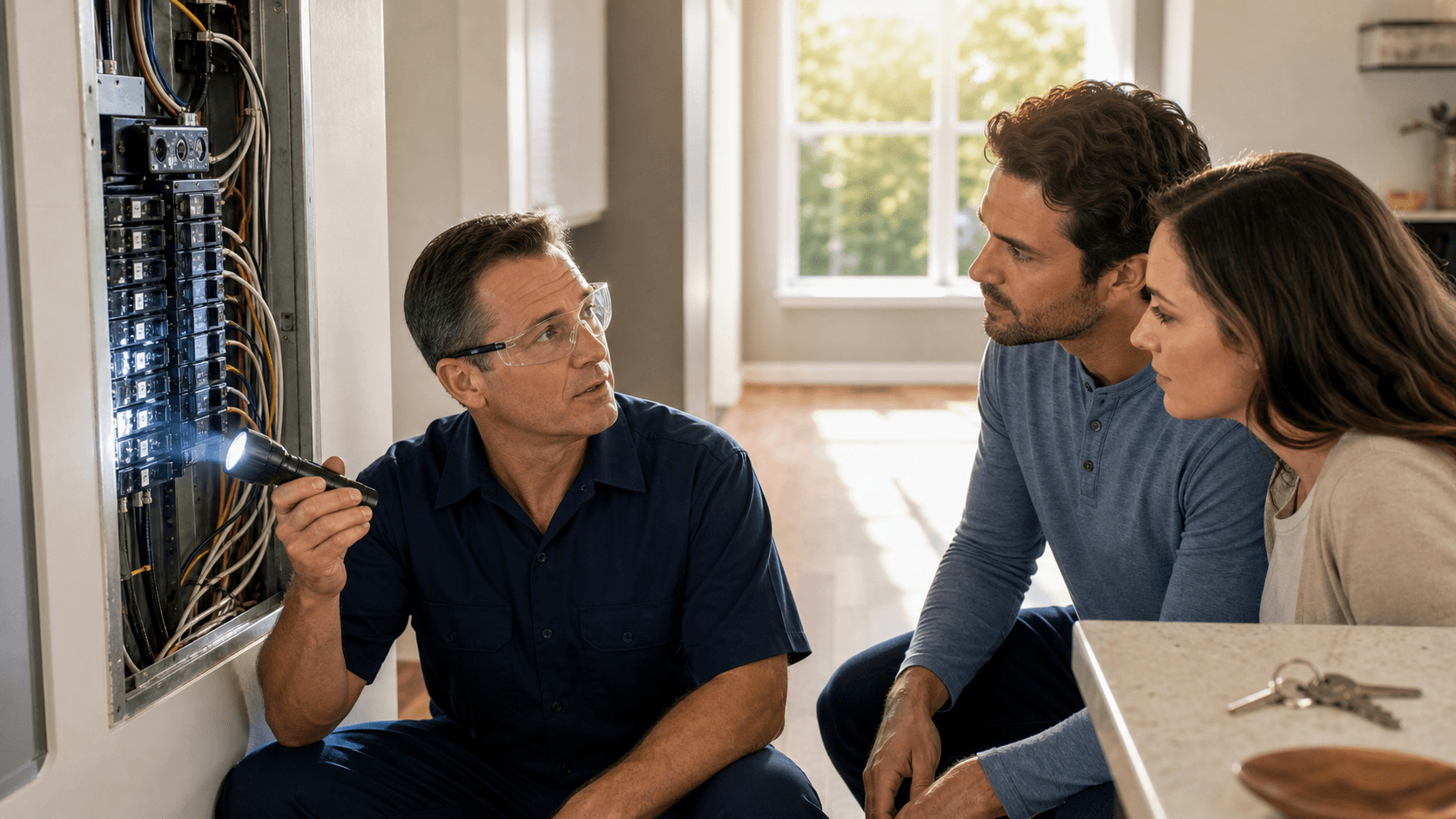
We get called to older Moody homes, places with several additions, and houses that have been flipped where the paint's new but the panel and wiring tell another story. An electrical walkthrough that's just focused on the wiring is different from a general inspection. An electrician in Moody, AL, can:
- Check panel capacity and condition
- Look at grounding and bonding
- Verify circuits for ovens, dryers, HVAC, and other big loads
- Spot obvious safety problems that could cause trouble later
Real electrical work should be permitted and inspected. That matters if you plan to add a shop, hot tub, EV charger, or more lighting later. If the current system's already stretched or not up to code, those projects get harder and more expensive.
You're taking on a long mortgage. A little extra time on the electrical now can save you from constant trips to the breaker, mystery outages, or surprise rewiring down the road.
Before You Sign: Get Straight Answers on the Electrical
Right before closing's the time to speak up. Don't be shy about asking for details on the electrical work that's been done over the years.
Good questions include:
- Are there receipts or records for recent electrical work?
- Who did the work, and were they licensed and bonded?
- Were permits pulled for big projects like panel changes or additions?
As you think back through the house, keep a short mental checklist:
- Breaker panel looks clean, labeled, and not packed to the limit
- GFCIs are in kitchens, baths, garage, and outdoor areas
- No obvious DIY mess in the attic, crawlspace, or garage
- No burnt smells, heavy flicker, or outlets that feel hot
- Outlets and switches are solid and actually work
If you're under contract on a home in Moody or nearby and something in that list feels off, that's a good time to bring in a pro for a closer look. At Massey Electric, the owner's the one who shows up. We're licensed and bonded, and we'd rather help you avoid a bad surprise now than hurry in after you move in and things have already gone wrong. Five solid jobs we can stand behind beat fifteen rushed ones every time.
Get Started With Your Project Today
If you are ready to update your wiring, add new fixtures, or tackle a larger remodel, we are here to help you plan each step with confidence. As your trusted electrician in Moody, AL, we focus on safe installations, clear communication, and work that respects your home and schedule. Reach out to Massey Electric today so we can review your project needs and recommend the best electrical solutions for your space. Let us handle the technical details so you can enjoy reliable power and a home that works the way you need it to.