Why Seasonal Electrical Problems Keep Showing Up
You're standing in your Trussville kitchen in August. The A/C kicks on, the lights blink for a second, and you hear a breaker trip in the panel. It feels random, but it's not. Your electrical system's getting hit harder at certain times of the year.
Around here, homes see very different loads in the summer, during the holidays, and when storm season ramps up. A/C units, space heaters, holiday lights, and lightning all hit your wiring in different ways. When things are already near their limit, that's when problems show up.
We're going to walk through three big seasonal trouble spots, what's usually going on behind the walls, and simple signs that it's time to stop resetting things and talk to a licensed electrician in Trussville, AL. As a one-man shop, I see the same patterns in panels and outlets around town every year, and a little understanding goes a long way toward keeping your home safe and your power steady.
Summer AC Load and Why Your Breakers Trip
When electricians say "load," we're just talking about how much stuff is pulling power at the same time. In the summer, that load can jump fast. You might have:
- AC running almost nonstop
- Electric dryer spinning
- Oven or cooktop on for dinner
- Pool pump, dehumidifier, or shop tools
- Chargers, TVs, and everything else humming along
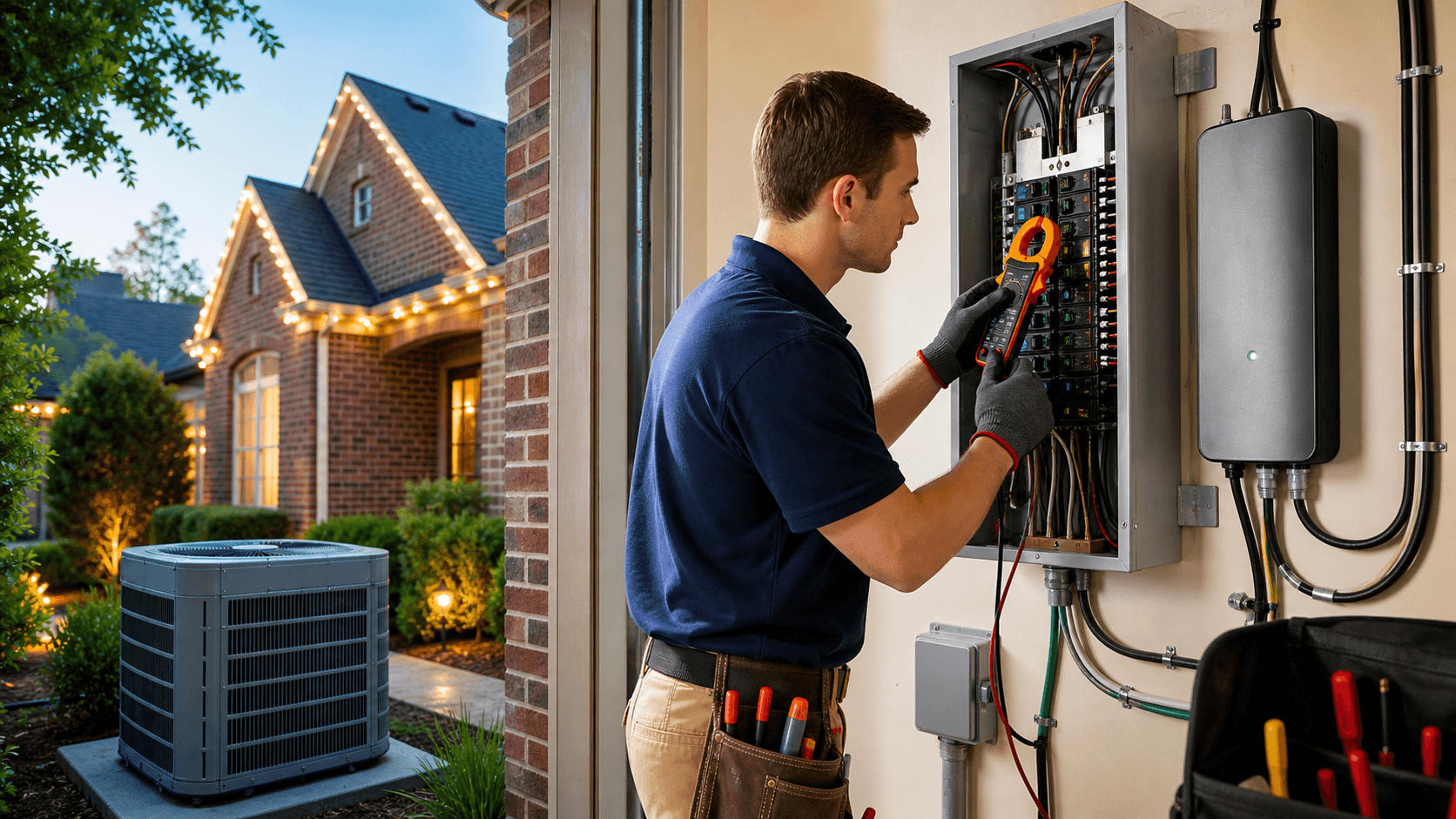
When the AC compressor kicks on, it pulls a big burst of power. If that circuit or your panel's already close to full, you can see lights dim for a second or a breaker trip. In older homes, or homes that have had a lot of new gear added over the years, this is very common.
Some red flags in summer are:
- Same breaker trips every time the AC starts
- Lights in one part of the house dim or flicker when big equipment comes on
- Outlets or the panel cover feel warm to the touch
- A humming or buzzing sound from the panel
A lot of homes now have window units on top of central AC, extra mini-split systems, or a fridge and deep freezer in the garage. Those are big loads. If they got tied into an already busy circuit, you can overload it without meaning to.
A few things you can check as a homeowner, without getting into the panel:
- Pay attention to what's on when the breaker trips
- Look at your panel for rust, staining, or a burnt smell
- Gently touch the panel door; it shouldn't feel hot
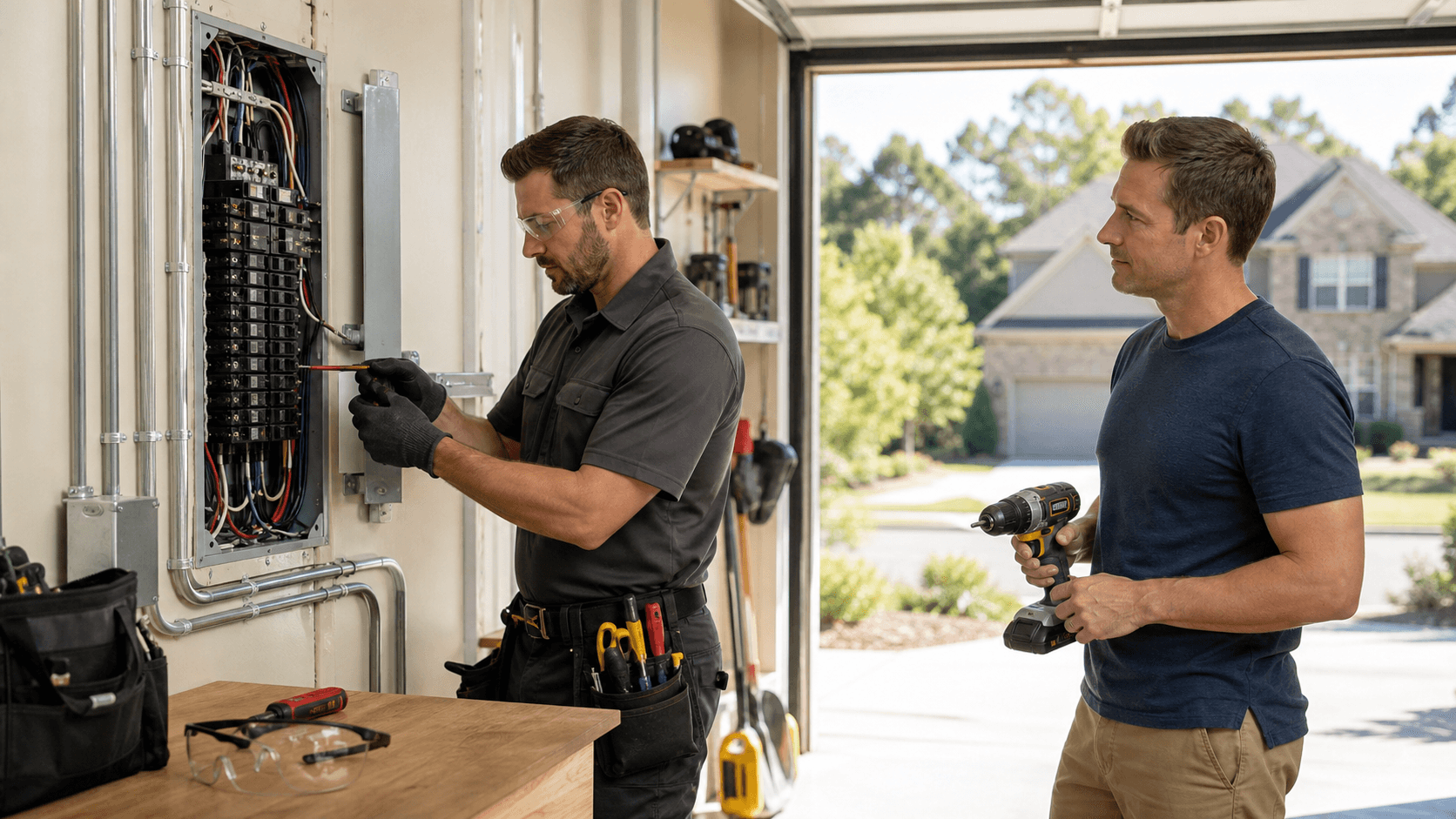
One thing that's never the fix: putting in a bigger breaker on a wire that wasn't sized for it. That's how wires get too hot and insulation can fail. If you have repeat trips on the same breaker, a burning smell, an AC tech saying "your power's the issue," or you've added big appliances without the panel ever being checked, that's when a licensed electrician in Trussville, AL really needs to look things over.
Holiday Lights, Space Heaters, and Overloaded Outlets
When the weather cools down, the way your home uses power changes again. November and December tend to sneak up on your wiring. You add:
- Strings of holiday lights
- Plug-in decorations inside and out
- Space heaters in that one cold room
- More kitchen use when family's in town
Power strips and "octopus" outlets are a big problem here. Daisy-chaining power strips together or stacking multiple adapters into one old outlet means all that current's still moving through the same wiring in the wall. Cheap, thin extension cords add even more risk, especially with heaters.
A few simple safe habits:
- Use outdoor-rated cords and lights outside, not indoor-only stuff
- Keep cords out from under rugs and away from doors and windows that can pinch them
- Always plug space heaters straight into a good, snug wall outlet
- Replace any cord that's cracked, taped, or has a loose plug
Pay attention to warning signs that you're overdoing it:
- Outlet covers or power strips feel warm or look discolored
- Plastic around plug blades looks slightly melted
- Lights dim when a heater, microwave, or coffee maker kicks on
- Breakers trip on big cooking days or when several heaters run at once
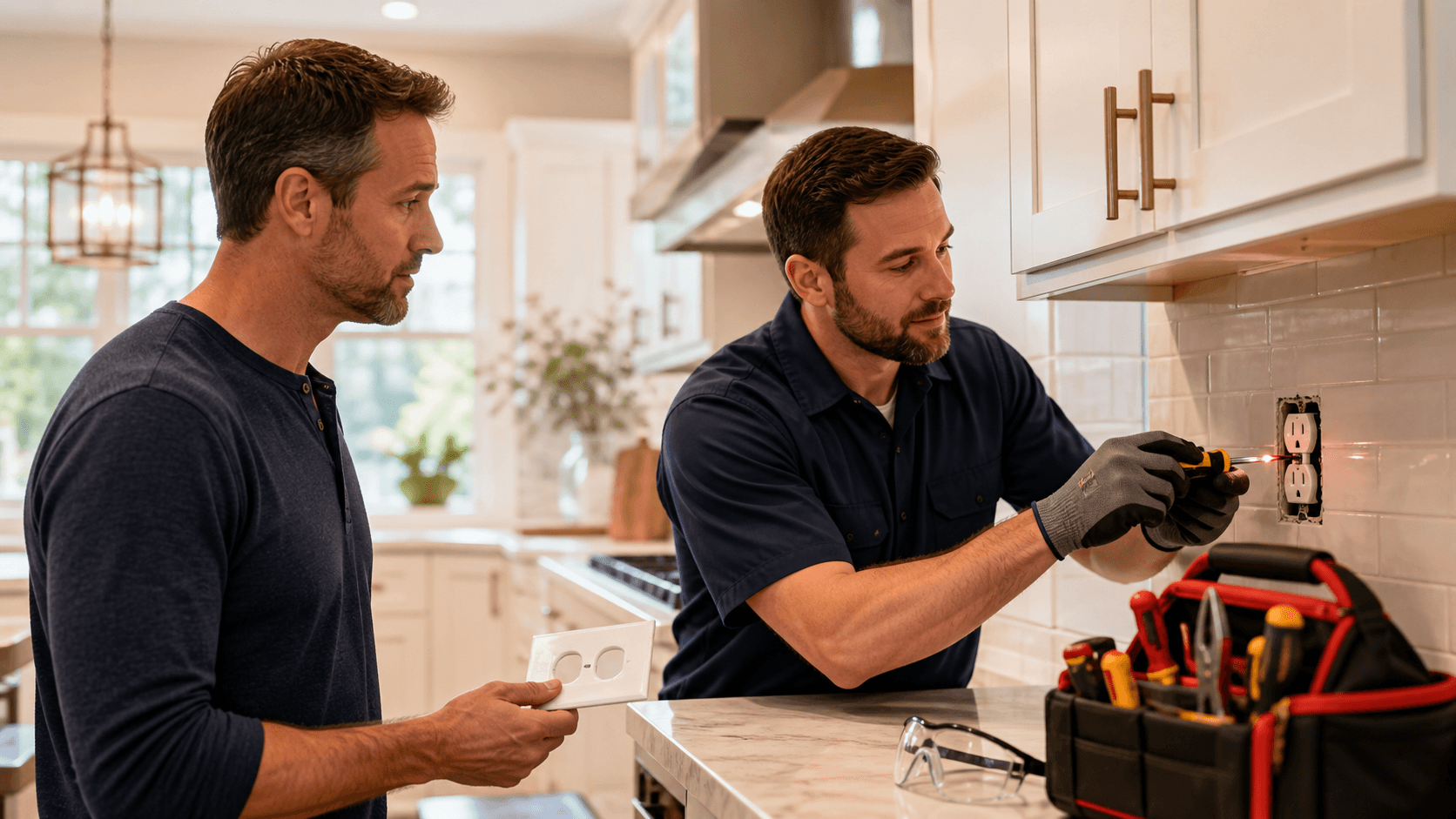
If you find yourself running more and more extension cords every year, adding more decorations to the same small group of outlets, or using space heaters to "fix" rooms that never stay warm, it may be time to update circuits or add outlets in smarter places instead of stacking more on what you have.
Storm Season, Power Surges, and Protecting Your Gear
Trussville gets its share of storms. Quick power cuts, lightning close by, and the power snapping back on hard can all send extra voltage through your home. You may not see sparks, but your electronics and appliances feel it.
A surge is just a short spike in voltage. That spike can stress or damage:
- TVs and game systems
- HVAC boards and thermostats
- Refrigerators and freezers
- Well pumps and garage door openers
- Computers and network gear
Those little plug-in surge strips help, but they're not the same as having surge protection at the panel. A whole-home device tries to knock down big spikes before they spread through every circuit in the house.
After storms, some common problems I see are:
- Breakers tripped that won't reset
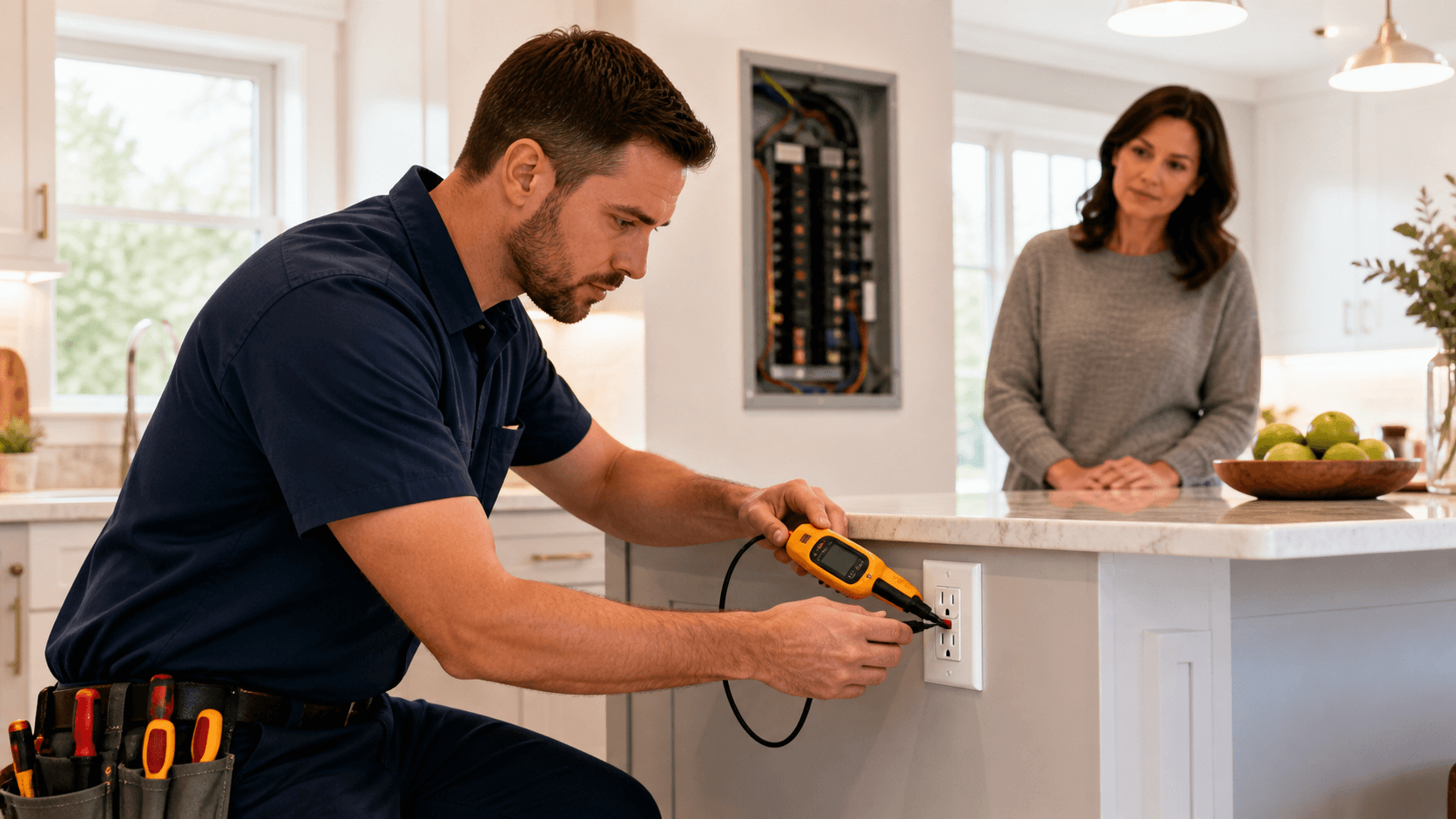
- GFCI outlets that stay tripped or won't test properly
- Random outlets in one room dead while others work
- Generators wired in ways that aren't safe for you or the utility workers
If you have a close lightning strike, several storms in a row with flickers and surges, circuits that die for no clear reason, or expensive equipment you care about, talking through better surge protection or safer generator setups with an electrician in Trussville, AL is a smart move.
When It's Safe To DIY and When To Call An Electrician
There are a few things homeowners can handle safely. There are also jobs that really shouldn't be DIY.
Safe, simple tasks usually include:
- Resetting a clearly labeled breaker that tripped once and stays on
- Pressing reset on a GFCI in a bathroom, kitchen, or garage
- Swapping light bulbs
- Unplugging and tossing a bad power strip or cord
Things that shouldn't be DIY:
- Swapping a breaker to a larger size just because it trips
- Adding your own circuits or moving outlets for holiday setups
- Wiring any kind of generator to backfeed through a dryer outlet or similar
- Taping up melted cords and using them anyway
Clear signs you need a licensed electrician right away:
- Smell of burning plastic around a panel, outlet, or switch
- Outlets that spark, pop, or feel hot
- Breakers that trip again the moment you reset them
- Lights that flicker across several rooms at once
- Any shock when you touch an appliance, sink, or metal cover
On my end, I pull permits when they're required, and I work so inspections pass and the job's safe long term, not just "working for now."
Get Ahead Of The Season Before Problems Start
The best time to deal with seasonal electrical issues is before the season hits hard. A little planning keeps you from dealing with tripped breakers on the hottest day or dead outlets in the middle of a stormy week.
A simple game plan looks like this:
- Before summer, make sure your panel's in good shape and that big loads like AC, dryers, and pool equipment are on proper circuits
- Before the holidays, look at where you always wish you had outlets and add them instead of running new extension cords every year
- Before storm season ramps up, talk about whole-home surge protection and safe generator connections
With Massey Electric, the same person you talk to is the one who shows up and does the work. The company's licensed and bonded, and the focus stays on doing the job right so it's something we can stand behind for years, not just a quick patch for today.
If you're seeing any of the warning signs I talked about, or you just want to get ahead of the next season, give me a call and we'll take a look at it together.
Get Started With Your Project Today
If you are ready to tackle your next electrical project or need fast help with an urgent issue, we are here to make the process straightforward from the first call to the final inspection. Schedule a convenient appointment with a trusted electrician in Trussville, AL so we can assess your needs and provide clear, upfront solutions. At Massey Electric, we take the time to explain your options, answer your questions, and complete the work safely and efficiently. Let us help you protect your home and keep everything running smoothly.