Stop Waiting on Storm Season To Get Ready
A standby generator sounds simple: power goes out, generator kicks on, house keeps running. But before that happens, your home has to be set up the right way. The spot outside, the gas or propane line, the panel, and the permits all need to be ready before anyone brings the generator to your yard.
Around Trussville and Greater Birmingham, a lot of folks start thinking about generators after a rough summer thunderstorm or when a hurricane in the Gulf is all over the news. By then, you're already behind. The smart move is to get your home ready early, so when it's time for generator installation in Trussville, AL, the actual install goes smoothly.
This checklist walks through how I look at your property before install day and what you can start planning now, so you're not scrambling later.
Pick The Right Spot For Your Generator
The first thing I look at is where the generator's going to sit. That one decision affects wiring, gas piping, noise, and even how happy your neighbors are.
Here's what I look for when I walk your yard:
- Close to your main electrical panel
- Close to your gas meter or propane tank
- A fairly level area that doesn't turn into a mud hole after a hard rain
- A place where I can work safely and the inspector can get to it
We also have to follow clearance rules. In plain language, that usually means:
- Away from windows, doors, and vents so exhaust can blow away
- Not tight up under a deck or roof overhang that traps fumes
- Enough room on all sides for service and airflow
Noise is another thing to think about. Standby generators aren't whisper-quiet. They run a weekly exercise test and of course they run when the power's out. I try to:
- Keep it off the bedroom side of the house if I can
- Keep it away from the neighbors' main hangout spots
- Use common sense about where sound will carry
A little planning on location now can save you a lot of regret later.
Gas Or Propane Line Prep Before Install Day
Next up is fuel. Around Trussville, most homes are either on natural gas or propane. Both work fine, but they're a little different on the install side.
Natural gas:
- Comes from a meter on the side of your house
- Needs a gas line run from that meter over to the generator
- Has to be sized right so the gas company can supply enough flow
Propane:
- Uses a tank above or below ground somewhere on your property
- Needs the right size tank for the generator and your other gas appliances
- May need the propane company to adjust regulators or move lines
For natural gas, sometimes your existing meter and piping are big enough. Sometimes they're not. When that happens, we may need your gas company or a plumber involved before generator day so the line and meter are ready to feed that extra load.
With propane, the big things are tank placement and capacity. If you're adding a standby generator, your propane company needs to know. That way they can:
- Confirm the tank size is enough
- Make sure the line from the tank to the house can handle the generator
- Plan for more frequent fills when the generator runs during outages
The main goal is simple: on install day, the gas or propane setup is ready so we're not standing around waiting on other work.
Permits, Pad, And Clearances
A lot of people hear the word "permit" and think it's just extra hassle. In reality, permits and inspections protect you. If you sell your house or deal with insurance, paperwork showing the work was permitted and passed inspection is a big deal.
When I handle generator installation in Trussville, AL, and nearby cities, I pull the permits that are needed and schedule inspections, including:
- Electrical permits
- Gas permits if new gas work is needed
- Sometimes simple zoning or placement checks
I'm licensed and bonded, and I'd rather take the time to do it right than rush something I can't stand behind. Timelines can vary. That's why waiting until the week before peak storm season isn't a great plan. Give yourself a little cushion so permits can be pulled and inspections can be scheduled without stress.
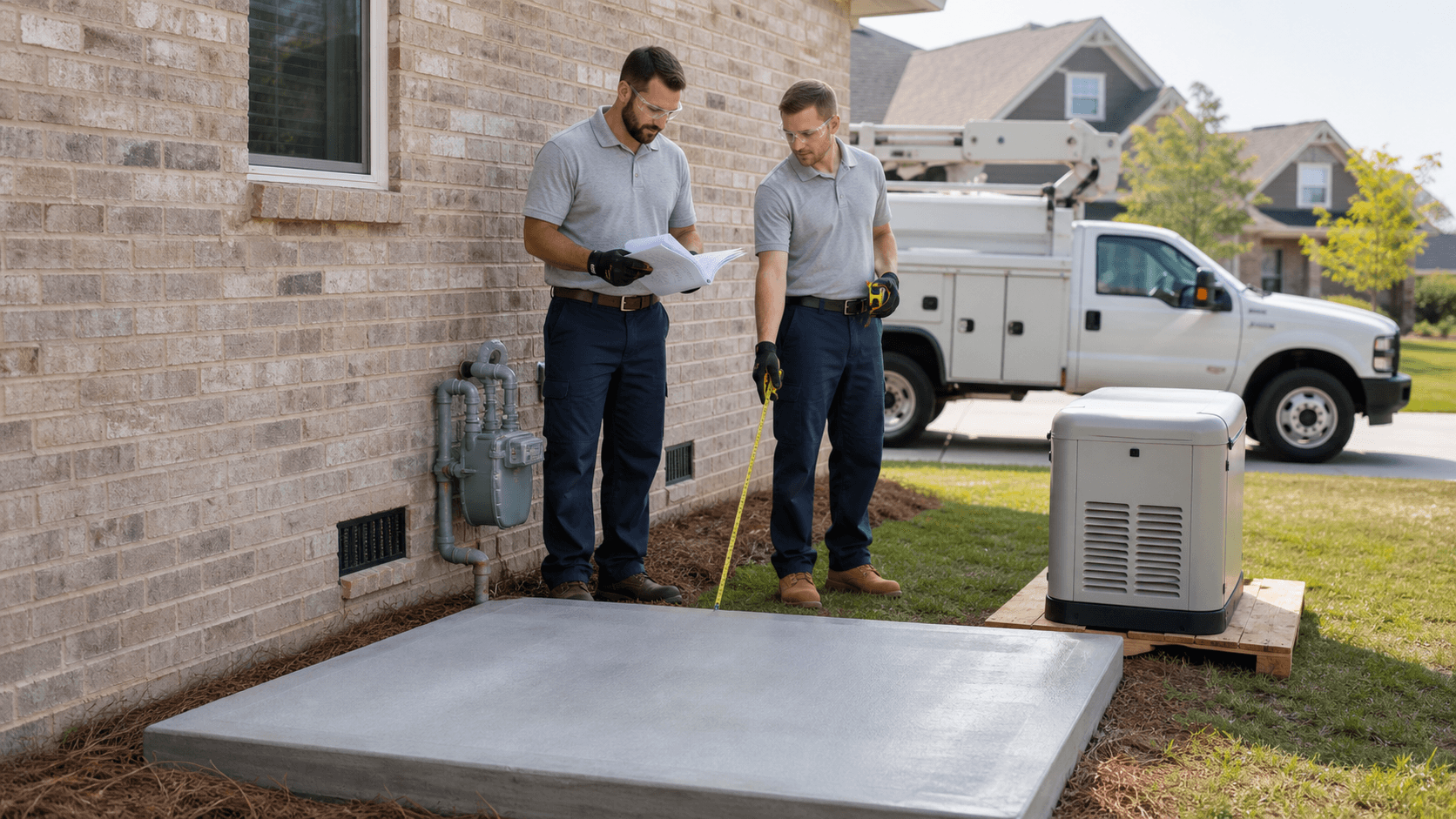
Now let's talk about the pad. A good pad:
- Keeps the generator level
- Keeps it out of standing water
- Gives us solid ground for anchoring
Common options are:
- Pre-cast concrete pad
- Poured-in-place concrete
- Approved composite pads that are heavy and stable
Around Greater Birmingham, with our clay soil and random heavy rains, I like pads that handle water and don't shift easily. Anchoring the generator to that pad matters too, especially when you get strong wind and soggy ground. While I look at placement, I also pay attention to drainage so water runs away from the pad instead of sitting under the unit and cracking or tilting it over time.
Utility Coordination And Panel Work
The generator itself is only half the story. The rest happens at your electrical panel and your utility meter.
We have to keep clear space around the generator not just for air, but so someone can actually work on it later. Bad ideas include:
- Cramming it behind an AC unit
- Hiding it in the middle of thick bushes
- Lining it up tight with trash cans or yard tools
On the utility side, there are times when I need to coordinate with Alabama Power or the local utility, especially if I'm:
- Installing or moving a disconnect
- Doing work near the meter base
- Needing the power turned off for part of the install
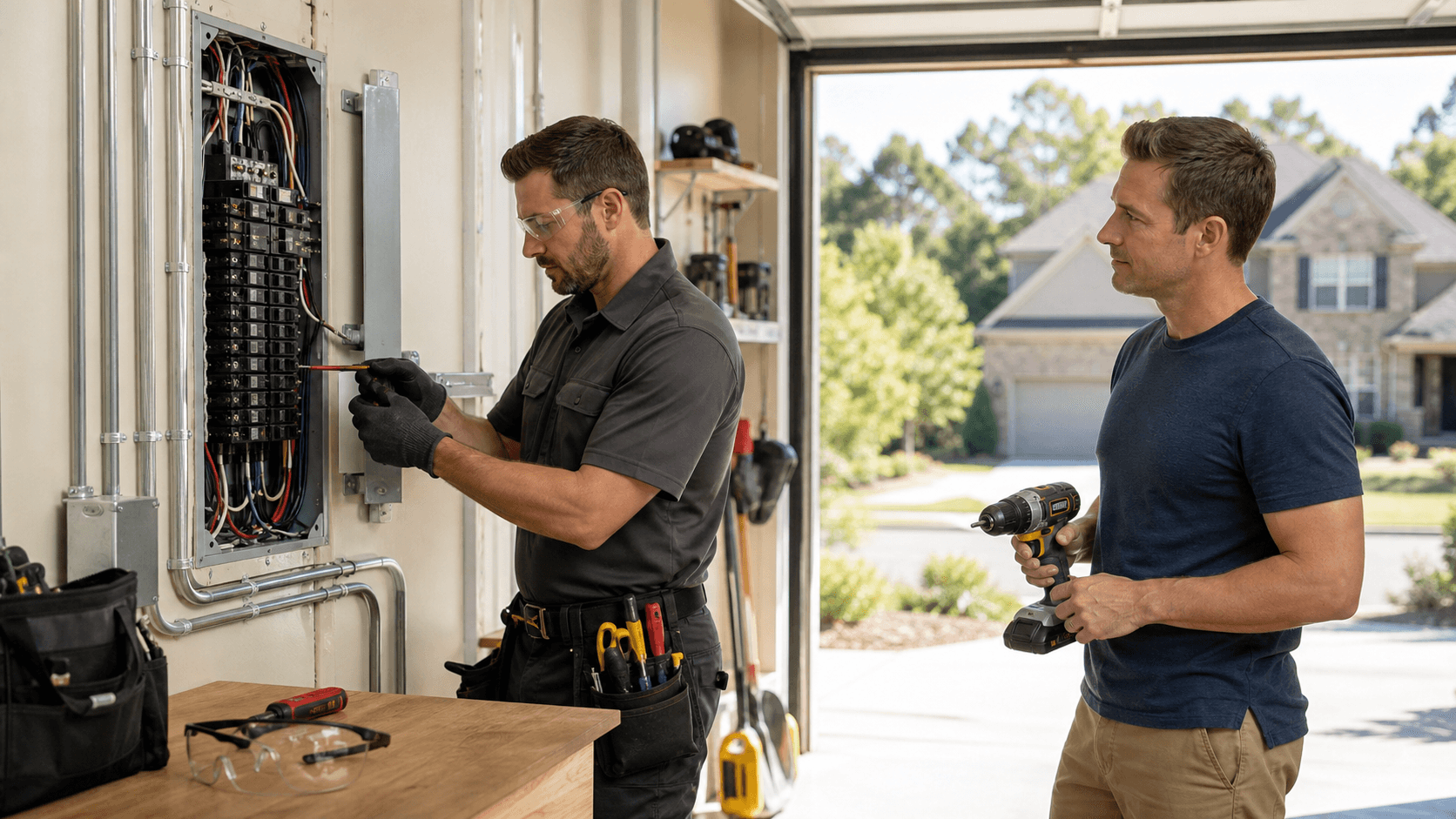
Inside, I look at your main electrical panel and decide where the automatic transfer switch will go. That switch is what senses the outage and tells the generator to power the house. Before install day, I want to know:
- Is there room in or near the panel for the transfer switch?
- Is the panel in good enough shape, or does it need upgrades first?
- How much of the house do you want on backup power?
A simple walk-through ahead of time gives us those answers so there are no big surprises when the generator shows up.
Pre-Install Homeowner Checklist You Can Actually Use
To make this easy, here's a simple checklist you can walk through around your own house:
- Spot picked out for the generator that's close to the panel and gas or propane
- Gas or propane plan in place, and you know who handles what
- Concrete or approved pad chosen and scheduled if needed
- Permits started so we're not waiting on paperwork later
- Clear path around the panel and meter for me to work
- Utility info handy in case coordination is needed
In Trussville and the Greater Birmingham area, weather can hit from a lot of directions. Strong summer storms, Gulf systems, and even the random winter ice event can knock power out. Getting these pieces lined up before the busy season makes install day smoother and keeps stress down.
I'd rather do five jobs right than fifteen I can't stand behind. If you're thinking about a standby generator and want your home set up the right way, give me a call or book a free estimate online and I'll come take a look at your place in person.
Get Started With Your Project Today
If you are ready to protect your home from unexpected outages, our team at Massey Electric is here to help. Schedule your professional generator installation in Trussville, AL so you can keep your lights, appliances, and vital systems running when you need them most. We will walk you through your options, handle the details, and complete the work safely and efficiently. Reach out today to discuss your needs and get your project on our schedule.